





Introduction — Lava Flows and Legends: Stromboli at the Heart of the Aeolian Islands
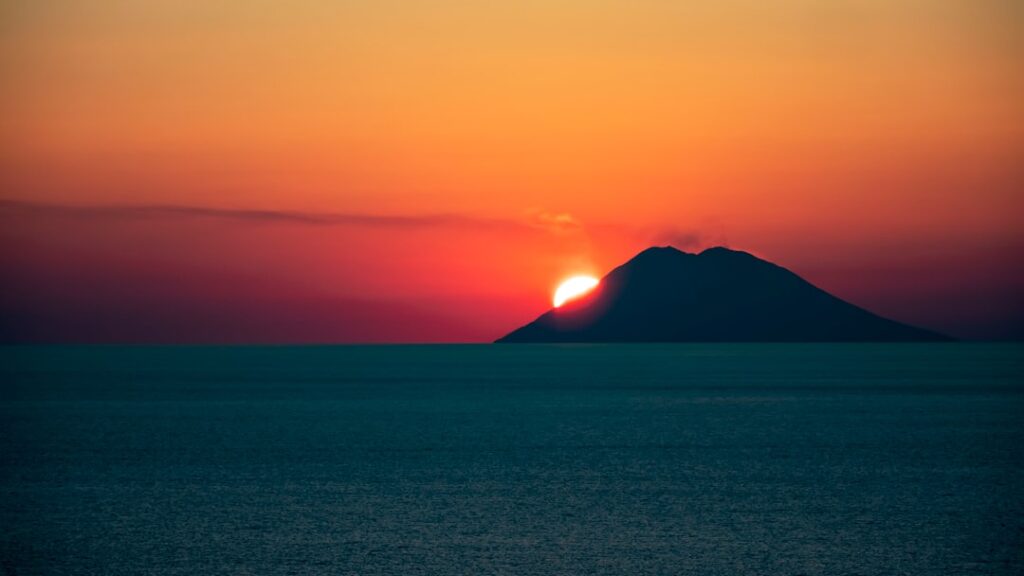
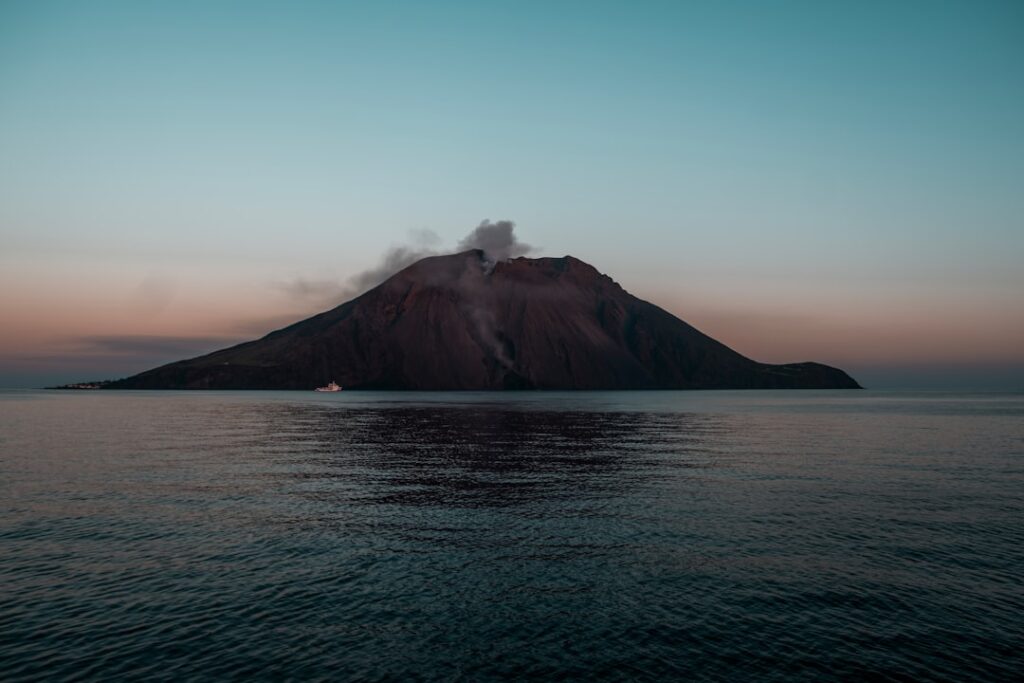
Perched at the northern tip of a volcanic archipelago that has inspired poets, sailors and scientists for centuries, Stromboli is more than a dark silhouette on the Mediterranean: it’s a stage that’s constantly lit by fire, a place where the land tells its stories in molten rock. The Aeolian Islands, a UNESCO World Heritage site, include seven main islands — Lipari, Salina, Vulcano, Stromboli, Panarea, Filicudi and Alicudi — but Stromboli is the one that draws the eye and a respectful fear thanks to its near-constant activity and the famous Sciara del Fuoco, the “stream of fire.”
In this comprehensive, professional guide we’ll dig into the lava flows and the legends tied to Stromboli: how flows form, where to watch them safely, which walks and excursions are worth your time, and the popular stories and myths that surround eruptions and cascades of molten rock. We’ll also cover the practicalities of organizing a visit — ports, schedules, typical prices, exact access points on the island, recommended restaurants and viewing spots — so your experience is both immersive and well-informed.
People on Stromboli have learned to live with the volcano. Trails are marked, local guides are trained, and the community preserves a collective memory filled with tales: old sailors speak of “torches on the sea,” local priests recount apparitions and ex-votos, while geologists describe flows that reshape and reclaim the black beaches. This blend of science and myth makes Stromboli a singular place where raw nature expresses its power and island culture feeds off geological events.
This guide is organized into four main sections: the geology and formation of flows, the best viewpoints and excursions (with addresses, times and prices), the island’s legends and popular stories, and practical safety and sustainable behavior tips to protect both the island and yourself. Throughout, you’ll find concrete recommendations — including exact places like Marina Corta and the Porticciolo di Scari, ferry timetables and price ranges for guides and tours — to help plan your visit. We’ll also include visual descriptions for each spot to spark your imagination and photographic reference points so you know exactly what to expect.
Before you go, remember that Stromboli is an active island: conditions can change fast. Night hikes to the crater often require an authorized guide and proper equipment. Local authorities (Capitaneria di Porto di Stromboli) and recognized guides enforce rules to keep people safe. This guide will help you understand those rules and make smart choices to enjoy the experience without putting yourself or the island at risk.
Stromboli’s Geology and How Lava Flows Form — understanding the fire under your feet
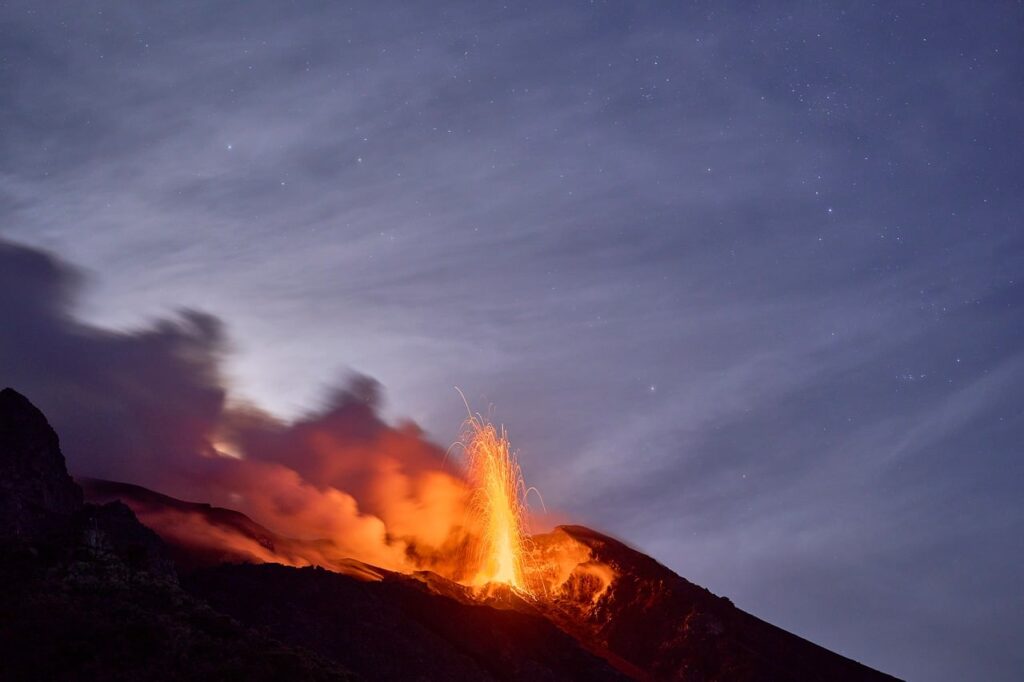
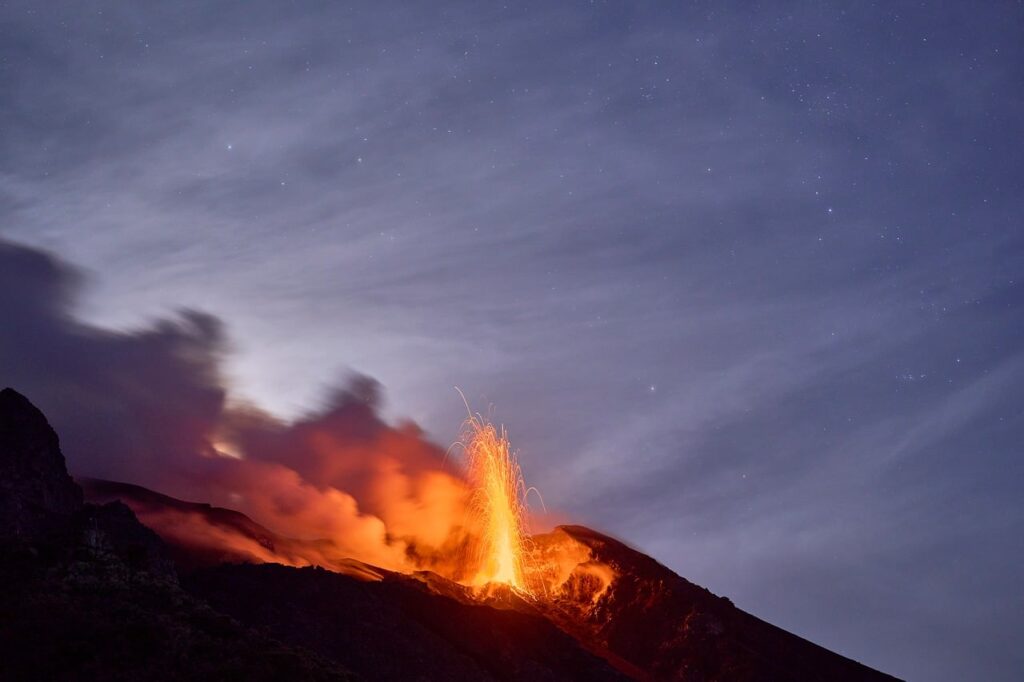
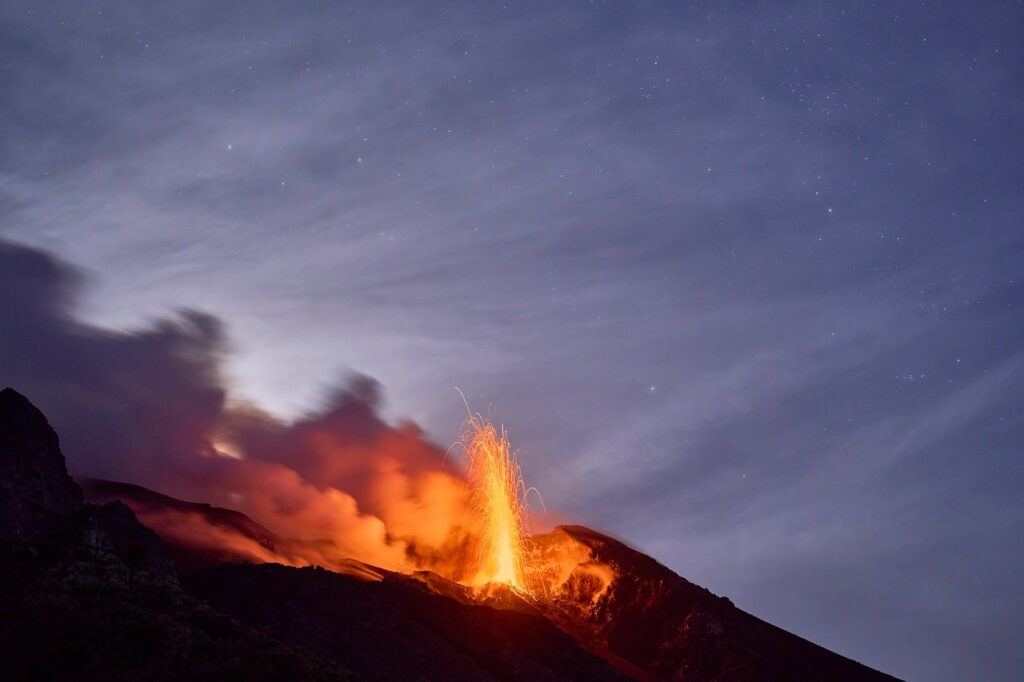
Stromboli is an active stratovolcano rising to 924 meters (Pizzo sopra la Fossa). Its defining feature is almost continuous Strombolian activity: regular, small-to-moderate explosions that throw bombs, ash and lava flows, which typically run down the Sciara del Fuoco — a large slope of dark debris descending from the main crater to the sea. The volcanic edifice is the result of many eruptive episodes piling up layers of lava, ash and scoria. These episodes create flows that, depending on volume and speed, can reshape the coastline and the island’s beaches.
A lava flow on Stromboli begins with magma rising through the main conduit. When pressure builds, explosions fragment the magma into scoria and pyroclastic bombs; if the lava is fluid enough it will run down the slopes — usually toward the Sciara del Fuoco, because it’s the lowest path to the sea. Flows can form slow, warm “rivers” of lava or advance more quickly if the composition and slope allow. Recent flows (over the past decades) have been mapped by INGV (Istituto Nazionale di Geofisica e Vulcanologia) teams and university geologists, as their behavior interests both scientists and local authorities.
Watching a flow requires understanding the volcano’s behavior: gas emissions (often visible as plumes), a deep rumbling, and flashes of incandescent material. When lava reaches the sea, the spectacle is dramatic: the molten rock meets water, producing steam plumes (local eruptive columns) and sometimes secondary explosions. These interactions can also trigger local microclimate changes. Authorities sometimes close off areas to avoid risks from spatter and toxic gases.
For visitors it’s crucial to remember that geology sets the rules. Zones like the Sciara del Fuoco (approximate coordinates: 38.789°N, 15.213°E) are the most spectacular but also the most dangerous. Access to the northeastern slope can be restricted, especially after active episodes. On the other hand, there are sea-based vantage points that let you safely appreciate volcanic dynamics from a boat. Local geological maps and studies are partly available at the island’s info point: « InfoTur Stromboli, Via Roma 45, 98050 Stromboli (ME) ». Indicative opening hours: daily 09:00–13:00 and 16:00–19:00, free entry.
Viewing Spots, Recommended Excursions and Practical Info
Watching lava flows and explosions means picking the right viewpoint and often going with company. Here are the main options, each described with addresses, schedules, price indications and practical tips.
-
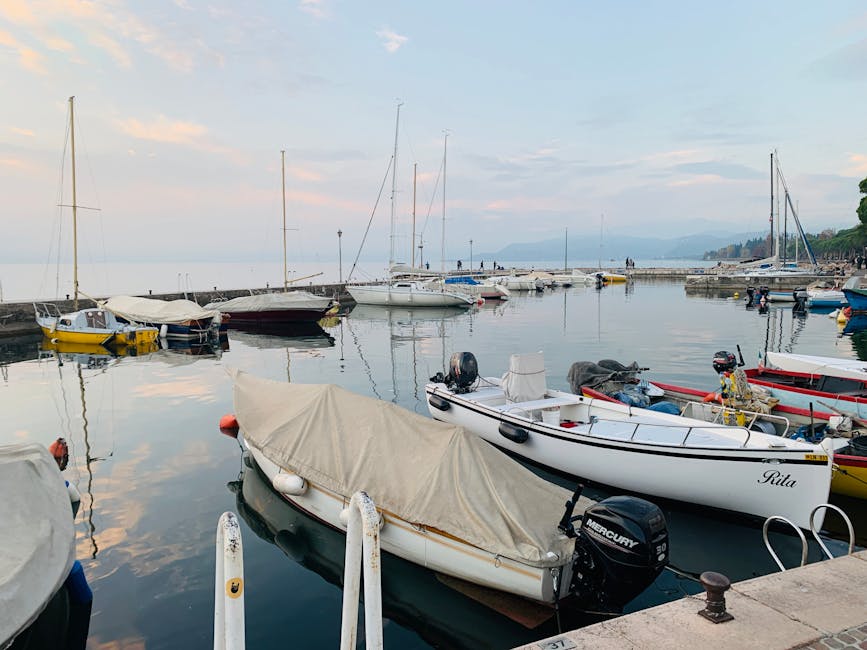
Marina Corta — Main harbor
Address: Marina Corta, 98050 Stromboli (ME), Italy.
Description: Marina Corta is the hub of tourist activity. Most shuttles and evening excursions leave from here. Aim to arrive 30 minutes before boarding. Small boats for coastal night viewing usually depart between 20:00 and 23:00 depending on the season. Indicative prices: boat trips to see the nighttime eruptions from around €35 per person for a shared 2-hour outing (book with « Stromboli Night Tours », Via Marina Corta 12). Tip: bring a windproof jacket — the sea can be chilly at night. -
Sea vantage points — Boat circuits
Boarding locations: Porto di Lipari (Porto Pignataro, Via Provinciale 73, 98055 Lipari ME) and Marina Corta, Stromboli.
Times: evening departures from around 19:00–21:00; in high season (June–September) several departures daily. Prices: Lipari–Stromboli hydrofoil with Liberty Lines about €20–€38 one-way (season-dependent), night observation boat tours €35–€60. Tour length: 2–3 hours. Tip: choose tours with English-speaking guides and safety helmets if offered. -
Guided hike to the summit — Pizzo sopra la Fossa
Meeting point: Centro Guide Stromboli, Via Spiaggia Nera 5, 98050 Stromboli (ME).
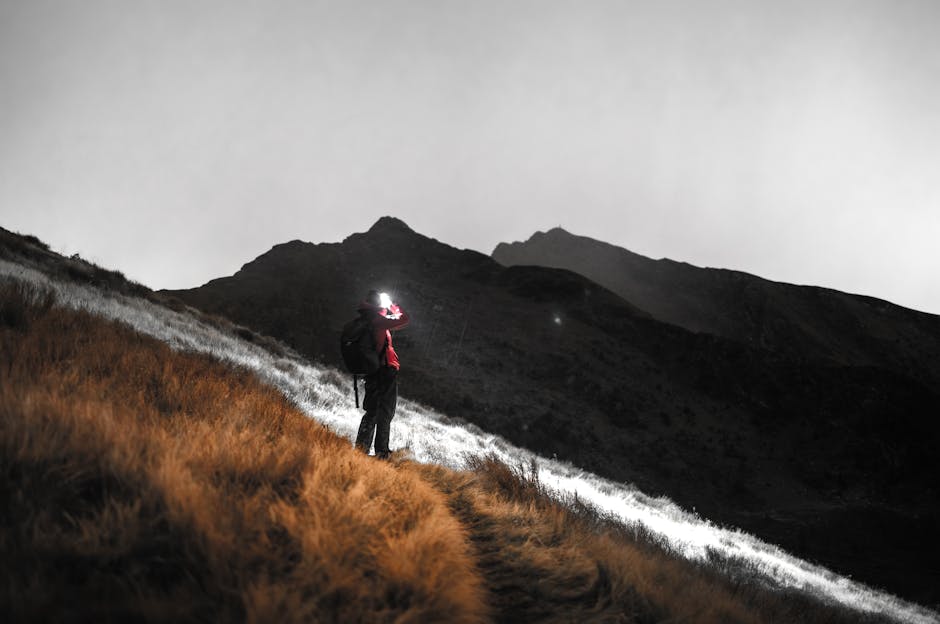
Times: night departures usually between 19:00 and 21:00; duration 4–6 hours (ascent, observation, descent). Indicative price: €30–€55 per person for the guide (sometimes more depending on group size), plus a safety fee of €10–€20 if required by the organizer. Gear: sturdy hiking boots, headlamp, warm jacket, water. Booking recommended by email or in person. Safety tip: the ascent requires an authorized guide — do not attempt it alone. -
Ficogrande Beach and Marina di Scari
Address: Spiaggia di Ficogrande, Via Ficogrande, 98050 Stromboli (ME). Marina di Scari: Scari, 98050 Stromboli (ME).
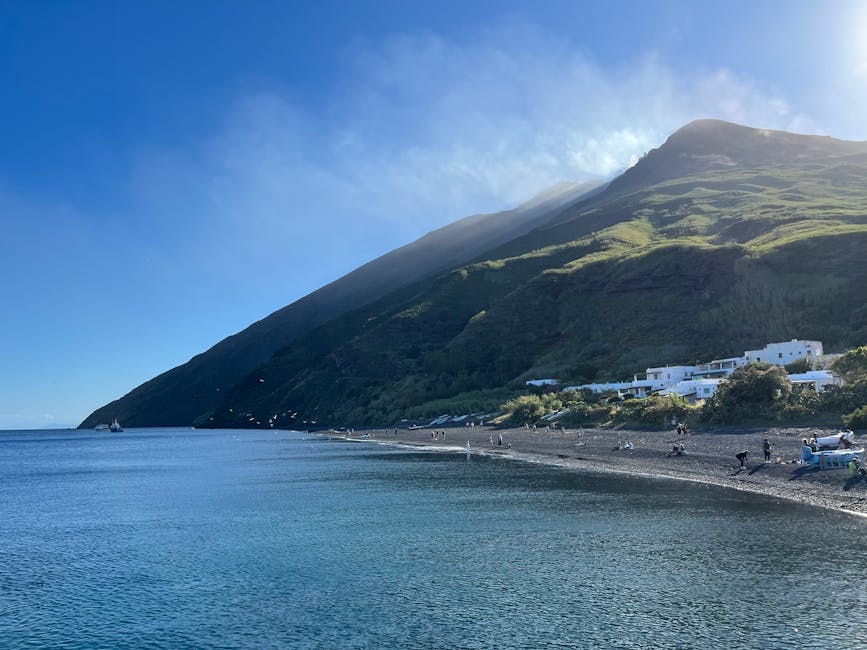
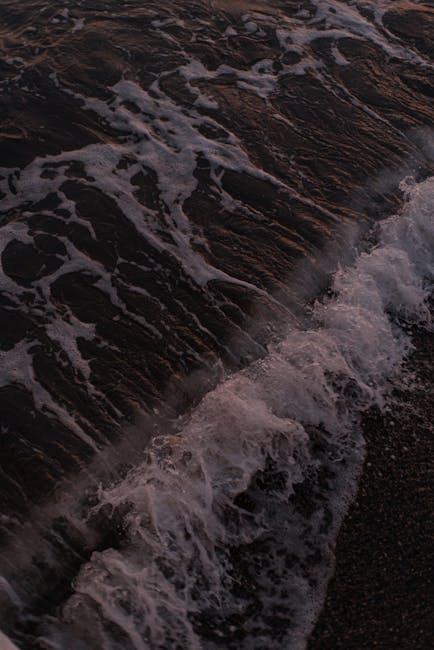
Description: The island’s black volcanic beaches offer a place to view flows from a distance (and to catch the red reflections at dusk). They’re also a practical refuge during the day. Services aren’t always open 24/7; there are small kiosks and local bars (e.g. Bar Grotta del Capo, Via Scari 3, open 08:00–23:00, drinks from €2, simple dishes €8–€15). Tip: avoid approaching hot zones and obey warning signs.
Other useful services:
- Capitaneria di Porto di Stromboli — Via Porto (Marina Corta), 98050 Stromboli (ME). Hours: office open 08:00–20:00, duty staff available for emergencies. They regulate boardings and provide information on navigation and temporary restrictions.
- Post office and local health clinic — Ufficio Postale Stromboli, Via Roma 10, 98050 Stromboli (ME). Hours: Mon–Fri 08:30–12:30. Local clinic (Guardia Medica): Via Roma 18, open on duty; in case of emergency call 112.
Legends, Myths and Local Tales — when lava becomes story
The stories of Stromboli are woven into its identity. Oral traditions passed down through generations blend observable facts with religious and supernatural interpretations. One of the most widespread legends is that of the “Lady of Fire” — a female apparition whom some elders consider the island’s protector, said to slow dangerous flows when an ex-voto is offered at the local church. The main parish church is San Vincenzo, located on Via Roma, 98050 Stromboli (ME); masses and ceremonies keep collective memory alive through offerings during heightened volcanic activity.
Another common tale: sailors speak of “torches” at night — natural phenomena sometimes interpreted as divine fires. Before modern instruments, these lights, produced by lava fountains and incandescent projections, were signs for fishermen: either steer clear or approach for a blessing. Old logbooks kept by fishermen and preserved by some islanders still mention “red nights” when the sea seemed to burn.
Artists and writers have also romanticized the volcano. Filmmaker Roberto Rossellini shot « Stromboli » (1950) with Ingrid Bergman, a work that helped cast the island as a place of fate and thwarted passion. That cinema blended real footage and local myths, amplifying Stromboli’s mystique for European visitors.
There are also more contemporary stories: locals recount how the community gathers after dramatic episodes, piling stones and ex-votos into niches, or organizing nighttime processions during major eruptions. These symbolic rites don’t erase danger but reinforce social cohesion and resilience. For visitors, hearing these tales in good company — for example over dinner at « Trattoria Da Maria« , Via Marina Corta 14, 98050 Stromboli (ME), open 12:00–22:30, dishes €10–€25 — enriches the experience and reveals the islanders’ living relationship with the volcano.
Practical Tips, Safety and Responsible Behavior
Visiting Stromboli is an intense experience that requires preparation and respect for the rules. Here are the essential tips, grouped for quick, actionable reading.
- Safety around flows: never approach an active lava flow without an authorized guide. Pyroclastic projections, gases (like sulfur dioxide) and falling rocks are real hazards. Local authorities can impose temporary restrictions — always follow signage and the instructions of the Capitaneria di Porto (Marina Corta, 98050 Stromboli).
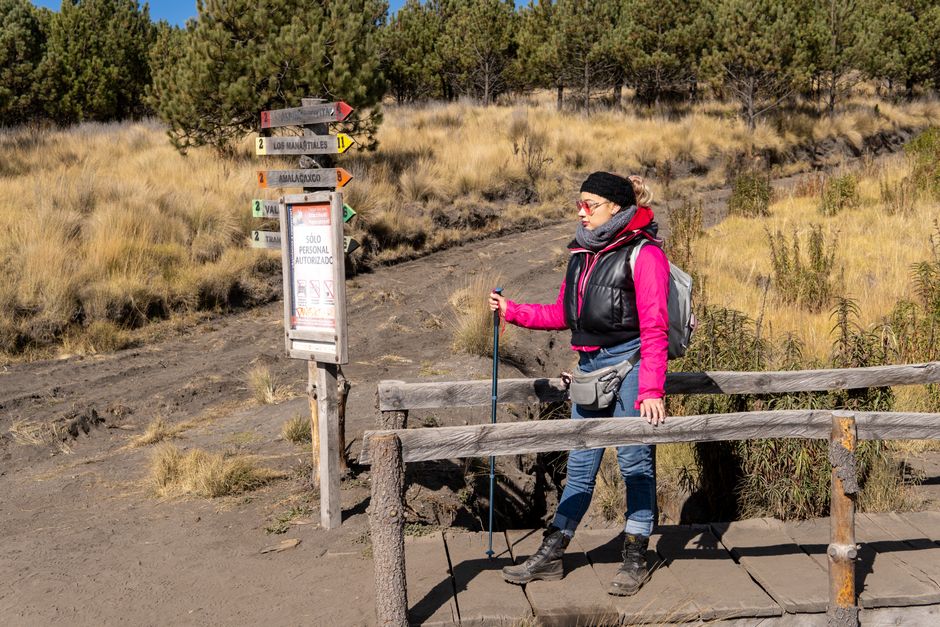
- Guides and hikes: book an accredited guide (e.g. Centro Guide Stromboli, Via Spiaggia Nera 5). Typical prices €30–€55 for accompaniment; check that the guide provides a helmet and safety instructions. Night ascents require a headlamp, proper boots, water and warm clothing.
- Navigation and ferries: Liberty Lines hydrofoils (departing from Milazzo and Lipari) offer regular connections; fares vary €20–€40 one-way. Larger operators like Siremar also run services in high season. Buy tickets in advance during peak season and allow time for weather-related delays.
- Respect for the environment: take all your rubbish with you, stick to marked trails and don’t remove lava fragments — collecting them is usually prohibited. Use local guides to support the island’s economy and promote sustainable tourism management.
- Health: bring a first-aid kit and take precautions if you’re sensitive to gases (respiratory conditions: consult a doctor before visiting). In a medical emergency call the European emergency number 112 and contact the local Guardia Medica.
Local practical tips:
- Best time: May–September for calmer seas and more stable weather (but also more crowds).
- Currency: euros (€). Many small shops prefer cash; ATMs may be limited.
- Communication: Italian is the dominant language, but many guides speak English. Learning a few useful Italian phrases makes for a friendlier welcome.
- Accommodation: several hotels and B&Bs cluster around Marina Corta and Scari — for example « Hotel Ristorante Stromboli », Via Marina Corta 30, 98050 Stromboli (ME) (rates approx. €70–€180 per night depending on season).
Conclusion — Between Nature’s Spectacle and Living Memory
Stromboli is a place where geology and culture intertwine: lava flows carve the landscape while legends and tales weave a collective memory. Watching a flow or an explosion from the sea or from the rim of Pizzo sopra la Fossa is an experience that mixes awe and respect. This guide has covered how flows form, the best viewpoints (Marina Corta, boat trips, guided hikes), local narratives and practical safety and responsible behavior tips. We included exact addresses and indicative hours to help you plan, plus price ranges for ferries, guides and excursions — essential information for traveling with peace of mind.
If you’re thinking of coming, be ready to adapt your plans to local conditions: weather, volcanic activity and authorities’ decisions can affect access and schedules. Favor local services — guides, restaurateurs and the harbor authority — to not only ensure your safety but also support a sustainable island economy. Take time to meet residents, listen to their stories and visit key places like San Vincenzo church (Via Roma) or Marina Corta harbor. Those human interactions will give real depth to your visit, beyond the natural spectacle.
Finally, remember Stromboli is a fragile treasure. Respect the environment, follow the rules and leave the island as you found it: a place where the earth keeps writing its own story, between flowing fire and legends shared by candlelight. Safe travels and stay cautious — Stromboli’s beauty is also its strength.