





Introduction
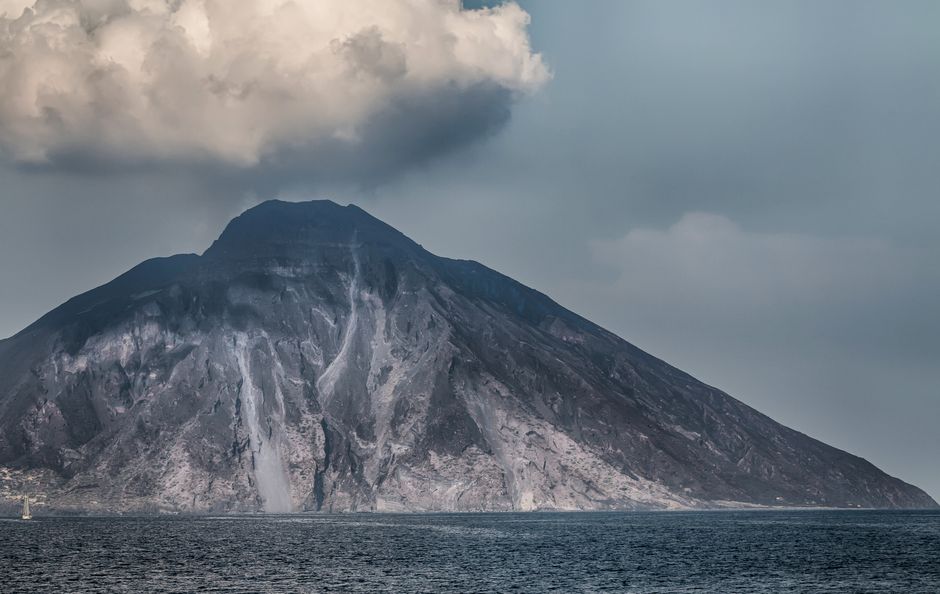
Technical diving around Stromboli, in the Aeolian Islands (Isole Eolie), is both demanding and unforgettable. This general guide, aimed at technical divers and experienced team leaders, takes you deep into the island’s submerged lava tunnels, the major fault line and the towering underwater cliffs that encircle Stromboli (98050 Stromboli ME, Italy). Stromboli is famous for its active volcano — the Stromboli Volcano — which carves out steep underwater terrain, canyons and cavities, creating diving profiles unique in the Mediterranean. These dives require careful preparation, advanced gas planning (Nitrox, Trimix), formal decompression procedures and strong navigation skills for overhead and confined environments.
Technically, the sites around Stromboli combine vertical and horizontal elements: partially lit volcanic tunnels, steep overhangs dropping into abysses, massive collapse slabs and a major fault (the Sciara del Fuoco continues underwater as a steep slope) that generates current shifts and thermal layers. Dives can be done day or night, but visibility, currents and volcanic activity impose strict operational windows. This guide gives practical addresses, opening times and price indications, plus immersive site descriptions, local tips and safety and equipment recommendations.
Before we dive in, note that Stromboli is administratively part of the municipality of Lipari, province of Messina (ME), Sicily. Common access points are Porto di Stromboli (Porto di Stromboli, Via Stromboli, 98050 Stromboli ME, Italy) and Marina di Ginostra (Località Ginostra, 98050 Stromboli ME, Italy). Crossings from Lipari or Milazzo run by hydrofoils and ferries — schedules and weather often dictate whether technical trips are possible. If you plan a technical operation, coordinate with local authorities, the harbormaster and certified local dive centres. The dives described here require technical qualifications (TDI/IANTD/NAUI Tec), dive insurance that covers decompression dives and special gas use, and an emergency plan including medical evacuation and hyperbaric chamber access (see the logistics section).
Planning and logistics: access, seasons, harbours and constraints
Planning a technical dive operation at Stromboli starts with arranging access and understanding seasonal constraints. Regular sea links for passengers and RIBs depart mainly from Lipari (Porto di Lipari, Via Roma 98055 Lipari ME, Italy) and Milazzo (Porto di Milazzo, Via G. De Gregorio 98057 Milazzo ME, Italy). Schedules and fares vary by season:
- Hydrofoil Liberty Lines: Milazzo–Lipari–Stromboli route. Timetables change with the season, usually morning and afternoon departures. Indicative 2026 fare: €28–40 one way from Milazzo to Stromboli (booking recommended). Office in Milazzo: Porto di Milazzo, Biglietteria Liberty Lines, Via G. De Gregorio 98057 Milazzo ME — Hours: 07:00–20:00.
- Ferry Siremar / Ustica Lines: passenger and freight services, less frequent schedules. 2026 fares: €15–30 depending on route and season. Ticket office: Porto di Lipari, Via Roma 98055 Lipari ME — Hours: 08:00–19:00 (local office).
For technical outings, entries are usually from a chartered RIB able to carry multiple cylinders, deco bottles and a small medical platform. Useful coordination points on the island:
- Porto di Stromboli — Via Stromboli, 98050 Stromboli ME, Italy. Harbour office (Ufficio del Porto): seasonal hours, typically 08:00–20:00 in high season. Local tel.: +39 (0)90 XXX XXXX. Paperwork for loading equipment can be handled here.
- Marina di Ginostra — Località Ginostra, 98050 Stromboli ME, Italy. A small port accessible only by sea, prized for its sheltered landing points. Access can be restricted when the sea is rough.
The best season for technical diving is May to October, with an optimal window from June to September when the weather is generally more stable. However, underwater visibility can be unpredictable after volcanic activity or slope collapses. Sun, swell and currents have a strong impact on safety — always check local weather bulletins and consult the Capitaneria di Porto di Stromboli for advice (address above). For a technical operation, plan at least 2–3 days on site: one day to check equipment and conditions, one day for diving and an extra day for evacuation capacity or rescheduling in case of unforeseen issues.
Major technical sites: tunnels, the fault and the underwater cliff
The volcanic relief around Stromboli creates standout technical sites. Three recurring profiles dominate: volcanic tunnels, the large fault associated with the Sciara del Fuoco, and steep underwater cliffs. Each site has specific hazards and attractions: rock architecture, Mediterranean benthic life, gorgonian colonies, and occasional hydrothermal activity. Below are detailed descriptions of known sites and their characteristics.
- Tunnels of Stromboli (Volcanic lava tunnels) — typical locations: the SW and NW sectors of the island, coordinates vary, access from Porto di Stromboli. These tunnels are partially collapsed lava conduits forming galleries with low ceilings and sections lit by sunlight at the entrances. Typical profiles: 12–35 m in the most accessible parts, deeper technical penetrations down to 45–60 m. Currents vary with thermal exchanges. Hazards: tight restrictions, unstable debris, and fine sediment that can drastically reduce visibility if disturbed. Recommendation: buddy diving, guideline reels, redundant lights, and overhead-environment training.
- The Main Fault (the Main Fault under Sciara del Fuoco) — the underwater continuation of the Sciara del Fuoco, a steep slope with crevices reaching beyond 200 m (well past recreational technical limits). Working depths for technical dives: 40–120 m depending on objectives and qualifications. Conditions: marked thermoclines, strong gradients and winds that amplify currents. This site is famed for walls covered in gorgonians and sponges, and for columns of pelagic fish in certain seasons. Trimix planning is required for depths beyond 50 m, with full redundancy and a detailed decompression plan. Avoid approaches under active slopes during volcanic episodes.
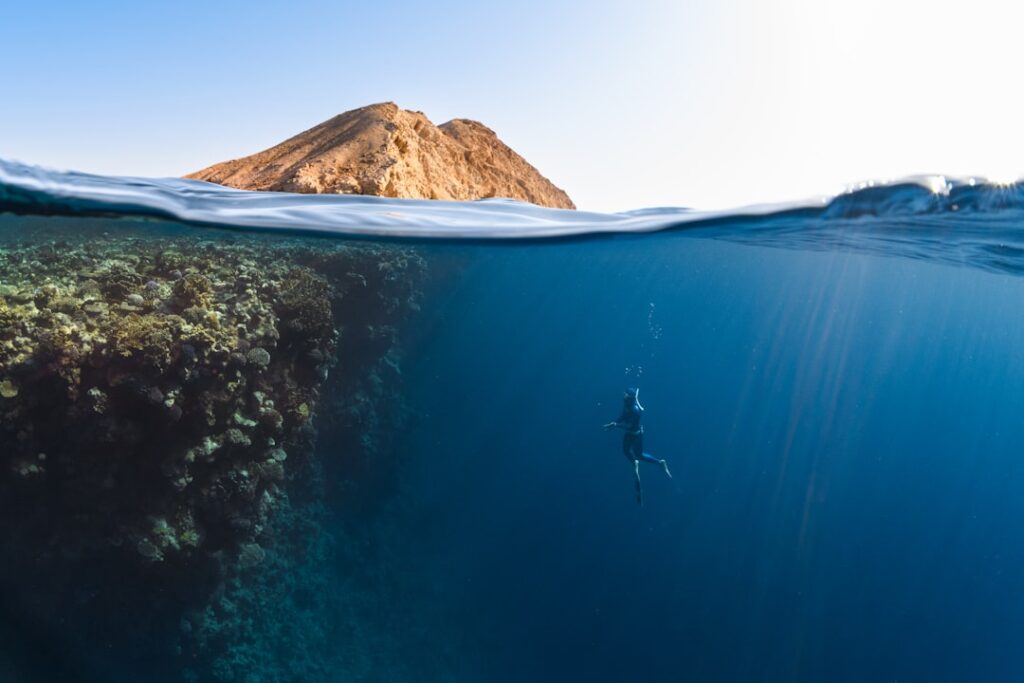
- Underwater Cliffs (Steep Submarine Cliffs east of Stromboli) — along the east and northeast coast, vertical cliffs drop to 80–150 m. Useful depths for technical exploration: 30–90 m. These walls offer overhangs and ledges where crustaceans and deep-reef fish gather. Visibility can be excellent on calm days, and the structure often makes directional navigation straightforward: descend along the wall, traverse at a chosen isobath, then ascend with staged stops. Common setups include sidemount or twin cylinders with deco bottles staged along the route.
Dives in these zones require safety lines, surface marker buoys (SMBs) and tight coordination between the team leader, the boat and surface support. Sites near the Sciara del Fuoco should be avoided during rockfalls or surface ejections. Wildlife sightings include Mediterranean groupers, dentex, moray eels, octopus, red gorgonians and occasionally schools of tuna and bonito near deep reliefs. For underwater orientation, natural landmarks (arches, ledges, pillars) are useful, but always run a guideline and use artificial reference points where appropriate.
Technical procedures: gear, gases and decompression management
Technical diving at Stromboli demands strict discipline around gear and gas planning. Below is a checklist and recommended standards, followed by practical advice for gas management and decompression.
- Required qualifications: Advanced technical diving certification (TDI Advanced Nitrox & Decompression Procedures, IANTD Advanced Trimix, or equivalent) with documented experience in deep and overhead dives. Insurance covering decompression dives and the use of special breathing gases.
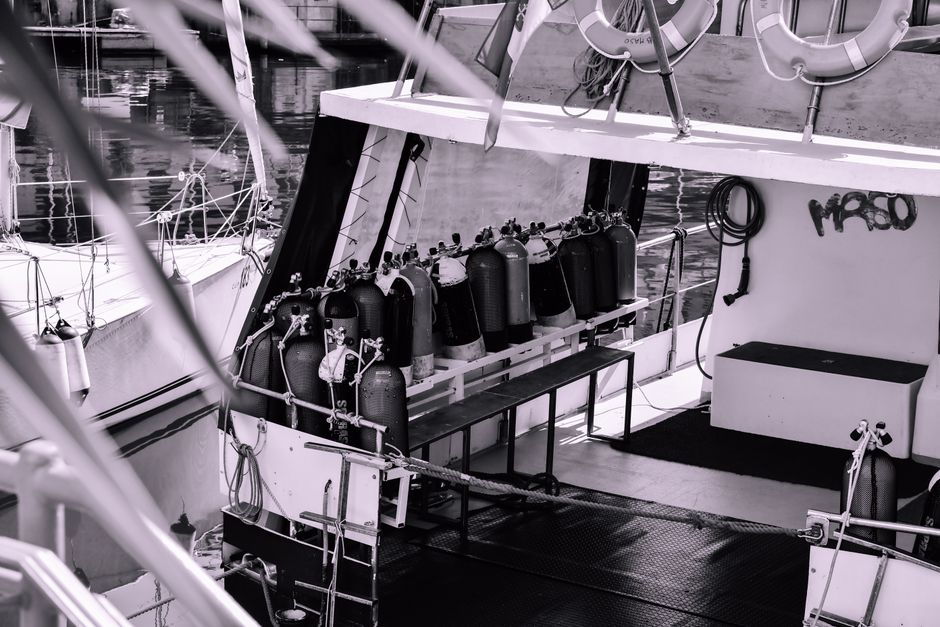
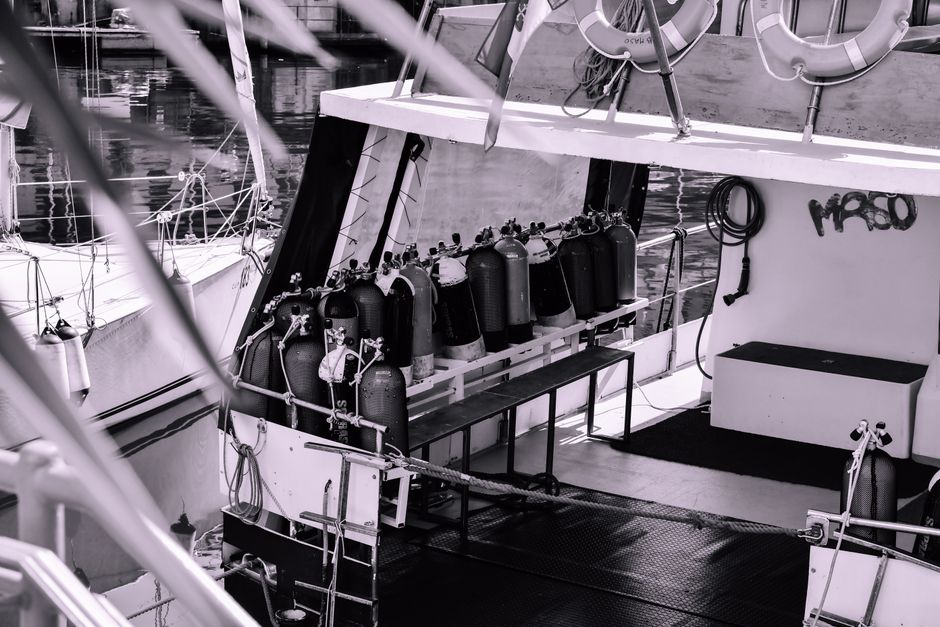
- Mandatory equipment: doubles or sidemount, redundant valves, backup regulators, spare pressure gauges, dive computer(s) configured for decompression, primary and secondary lights (minimum 2), guideline reels, SMBs and a deco buoy. Some teams operate with 100% bailout and carry decompression bottles stocked with appropriate mixes (pure O2 for shallow stops, Nitrox 50 for mid-level stops, Trimix for deco where required).
- Gas management: Depths > 40 m: plan Nitrox–Trimix or Trimix as the bottom gas. Example mix for 50–70 m dives: Trimix 20/30 (20% O2, 30% He) for the bottom, bailout with Nitrox 50 (50% O2) for intermediate stops and 100% O2 for final stops. Approximate filling costs (2026): Nitrox fill €10–20 per cylinder, Trimix fill €40–80 depending on depth and helium proportion. Many teams provide premix service on demand; indicative price: €60–120 per specific mix (pre-order recommended).
- Decompression planning: Use validated software/plans (GUE, TDI, Bühlmann modified) and build conservative margins (longer stops, extra stops). For deep dives, passive decompression can last 30–90+ minutes depending on depth and profile. Carry medical O2 on board for incident response. Ensure the boat has a full medical kit and satellite phone or VHF 16 for emergency contact.
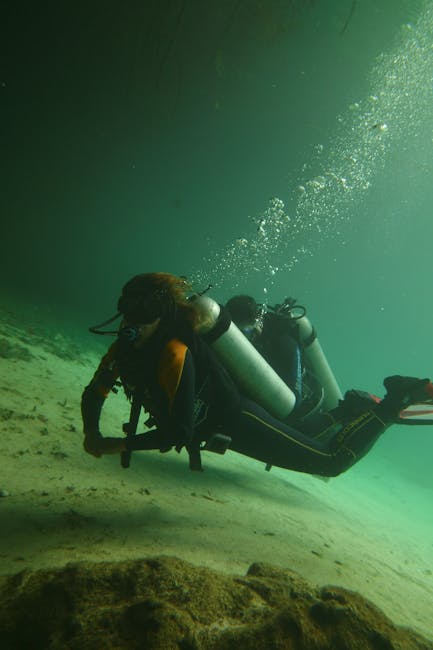
Local practical tips: alternate diving and rest days, stay well hydrated (dehydration increases DCS risk), avoid alcohol in the days before diving, and adapt your dive plan to the day’s weather — currents around the island can change rapidly. Always build conservative gas margins. Surface markers must be clearly visible from the boat and deployed at the first sign. Finally, set up a medical evacuation procedure with the Capitaneria di Porto di Stromboli and identify the nearest hyperbaric chamber (usually in Milazzo or Messina) before any technical dive.
Local operators, pricing details and practical on-site tips
For technical dives at Stromboli, it’s strongly recommended to work with experienced local operators who know the currents and volcanic particularities. Below is a typical selection of local actors and practical information, with addresses, hours and indicative prices (2026 estimates — confirm when booking).
-
Stromboli Technical Diving — Operational base (example)
Address: Via San Vincenzo 1, 98050 Stromboli ME, Italy.
Hours: 08:00–18:00 (high season), closed Wednesdays off-season.
Services: technical boat trips, Trimix fills, technical equipment rental (sidemount, twins), certified technical instructors. Indicative rates: full-day technical outing (including boat, skipper, technical guide): €220–350/person (depending on number of divers and gas needs). Full technical gear rental: €80–150/day. Specific Trimix fills: €60–90 per mix. Guiding (technical guide): €150–300/day depending on experience and target depth. -
Diving Center Ginostra
Address: Località Ginostra, 98050 Stromboli ME, Italy.
Hours: 07:30–19:00 in high season.
Services: RIB trips, local escort, logistical support for boat and surface operations. Fares: boat transfers (Lipari–Ginostra–Stromboli): €15–40 depending on route; half-day technical RIB support (surface cover + gear storage): €120–220. -
Porto di Stromboli — Harbour Office
Address: Via Stromboli, 98050 Stromboli ME, Italy.
Hours: 08:00–20:00 in high season.
Services: port authorisations, local weather info and emergency contacts. Harbour fees vary by vessel; small working boats: €10–30 per day depending on length.
Booking ahead is essential, especially in high season (June–September). Technical teams typically request documents: certificates, dive log proving experience, personal gear list and insurance. If you’re travelling light, check availability of logistic help to move bulky equipment between the port and your accommodation (some hotels and B&Bs offer this service for €5–20).
Local safety and integration tips: during your stay, respect environmental restrictions — zones near the active cone may be regulated; read the signs at Sciara del Fuoco and confirm with the harbour office. For accommodation, small family-run places in Stromboli (e.g. B&Bs and small hotels around Via Roma and Via San Vincenzo) offer rooms from €40–120 depending on comfort; Ginostra is more rustic and suits visitors who come prepared. Bring spare consumables (batteries, spare parts) and be ready for occasional power outages; many operators keep spare gear and parts for field repairs.
Best practices, risks and local advice
Technical diving at Stromboli means accepting a dynamic and sometimes hostile environment. Here’s a summary of best practices, identified risks and local tips to optimise your safety and experience.
- Medical preparation: Get a recent medical evaluation that clears you for technical diving. Bring a personal medication kit, seasickness tablets if needed, and, if possible, a small supply of medical oxygen. Verify that your insurance covers repatriation and hyperbaric treatment.
- Communication: Keep a VHF radio and a satellite phone on board. Mobile coverage is intermittent. Coordinate a shore contact (e.g. hotel, harbour office) and communicate your dive plan, expected return time and boat ID.
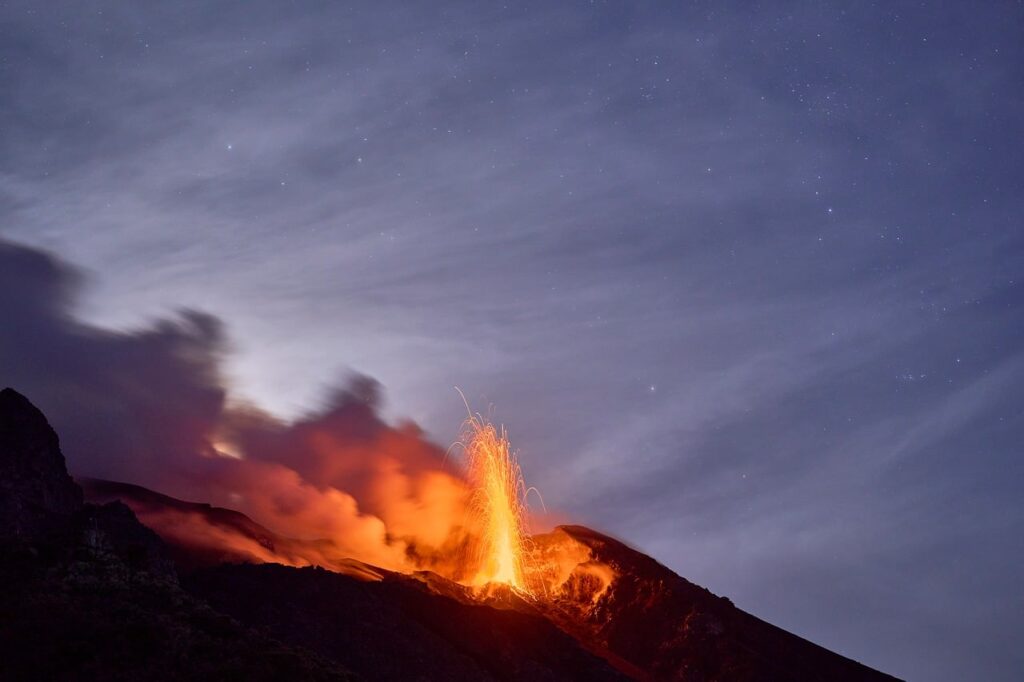
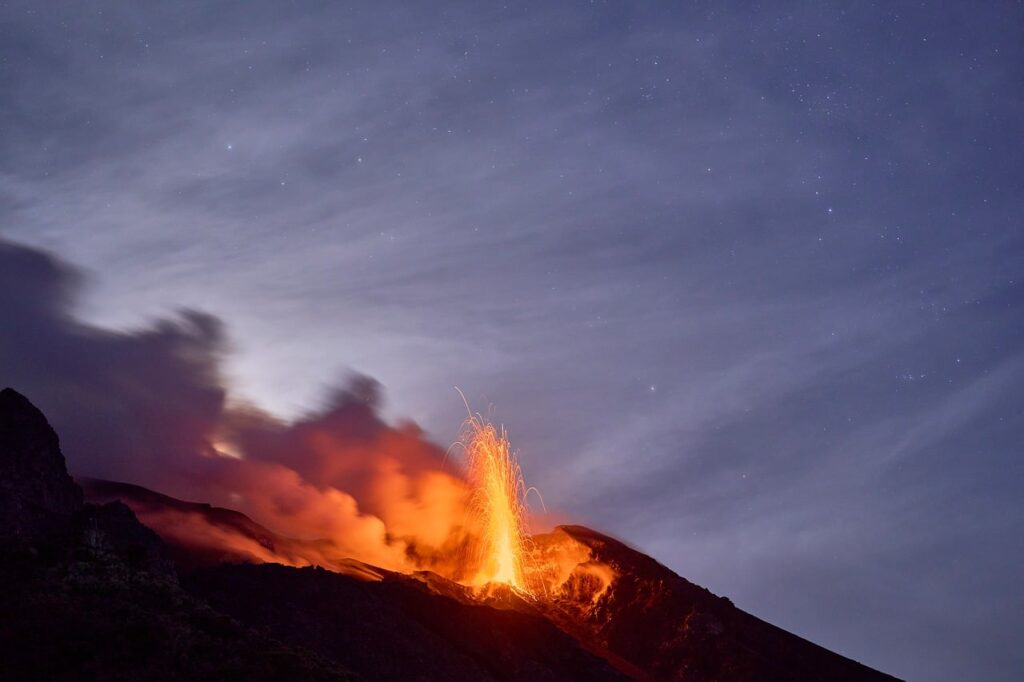
- Weather and volcanic activity: Check INGV (Istituto Nazionale di Geofisica e Vulcanologia) notices for Stromboli Volcano activity. Any notable increase (explosive eruptions, lava flows, rockfalls) should cancel outings near the Sciara del Fuoco.
- Conservation and responsibility: Follow marine protected area rules and avoid touching volcanic formations and sessile life. Pack out your trash and don’t use destructive gear like nets.
- Logistical flexibility: Allow time buffers, carry cash (many shops don’t take cards) and plan extra days for weather delays. Local operators and accommodations appreciate direct confirmations by phone or WhatsApp.
Finally, remember that Stromboli is a living environment: landscapes and dive sites can change after volcanic events. Technical diving here is as much about risk management as exploration — good preparation, humility and respect for the environment will let you safely explore these unique lava tunnels, faults and underwater cliffs.
Conclusion
Technical diving at Stromboli is a spectacular challenge for qualified divers: lava tunnels, the fault that runs under the Sciara del Fuoco and the underwater cliffs present exceptional geological architecture and rich Mediterranean life. This guide summarized logistical planning (sea links, harbours, harbour office), described main site types and profiles, detailed gear and gas-management best practices, and provided practical pointers on local operators, prices and useful addresses. A successful technical operation depends largely on rigorous preparation, coordination with experienced local teams and close attention to weather and volcanic bulletins.
Practically speaking, prepare your dive plan in advance with conservative margins, pre-book your special mixes (Trimix, Nitrox) and confirm the availability of a boat capable of transporting all decompression gear. Factor in buffer days and set up an emergency plan with the Capitaneria di Porto di Stromboli (Via Stromboli, 98050 Stromboli ME, Italy) and the nearest hyperbaric chamber (Milazzo/Messina). Respect local rules and the marine environment: underwater volcanic sites are fragile and sometimes unstable; prudence and professionalism are your best allies.
If you’d like detailed routes, sample profiles or an introduction to vetted local operators, I can prepare a personalised dossier including equipment checklists, dive-plan templates (stops, gas consumption), local contacts with phone numbers and a full budget estimate based on the duration and format of your technical operation. Safe diving and responsible exploration of Stromboli’s volcanic depths.