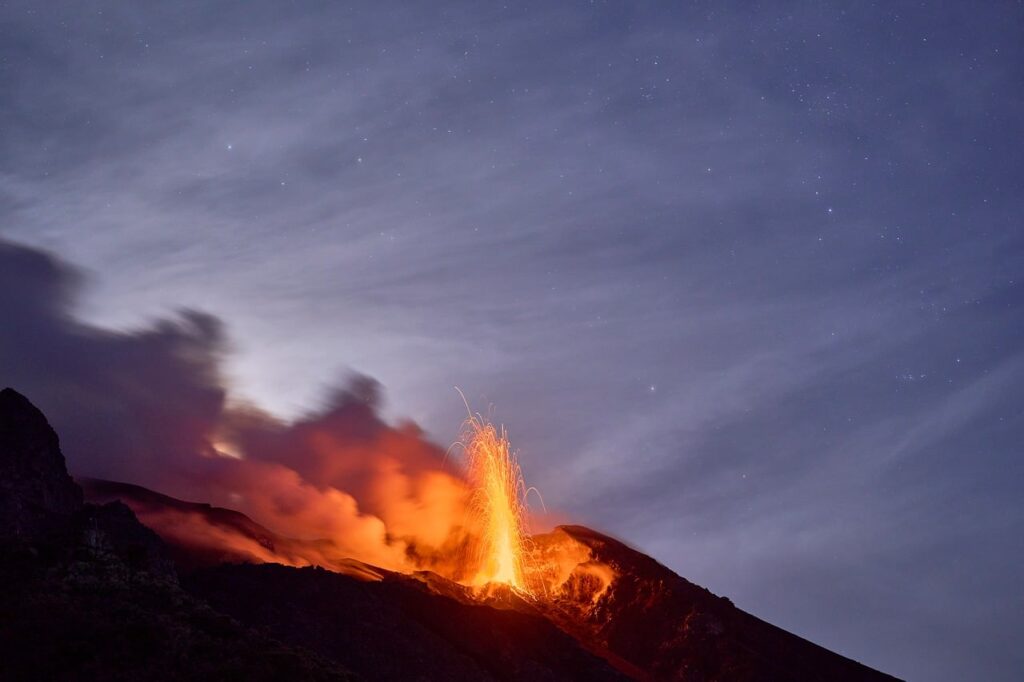






Introduction: Natural Observatory — Reading Activity Signals in the Aeolian Islands
The Aeolian Islands (Isole Eolie), a volcanic archipelago north of Sicily, are a living laboratory for anyone who knows how to read nature’s cues. From Stromboli and Vulcano to Lipari, Salina and Panarea, each island shows visible and audible signs of geological, marine and biological activity. Understanding these activity signals is essential for the responsible visitor: it not only helps you appreciate the raw beauty of the landscapes, but also reduces risk, ensures you respect regulated access, and enriches your experience with concrete knowledge. This general guide, written for hikers, naturalists and the curious, explains how to spot and interpret the most common signals — minor earthquakes, fumarole emissions, local thermal anomalies, sea discolorations and animal behavior — and gives specific places, addresses, opening times and indicative prices to deepen your on-site observations.
Reading nature here isn’t just looking: it’s hearing the dull thump of a gas release, smelling sulfur on the breeze, measuring the temperature of blackened ground and tracing the path of an old lava flow. The Aeolian Islands are particularly well-suited to a natural-observatory approach because observability is high: craters are often accessible (with a guide), the sea reveals currents and hydrothermal plumes close to shore, and marine life responds quickly to changes, offering valuable biological signals. However, these islands are not museums — they are dynamic and sometimes unpredictable. That’s why this guide provides exact addresses (museums, ports, trailheads), practical details (hours, prices in euros), local safety tips and gear recommendations so you can turn observation into a safe, respectful activity.
In the sections that follow you’ll find concrete reference points: where to position yourself on Lipari’s coast to watch a bay change color, where to board at Porto di Stromboli for a night observing the Sciara del Fuoco, which biological signs to watch for on Salina and Panarea, and which institutional services to contact (interpretation centers and local guides) for reliable data. Visual cues, opening hours and prices listed are provided to help you plan your trip, but remember nature and local rules change — always check current conditions before you go. Finally, the guide includes practical advice (recommended kit, how to behave around hot ground and fumarolic zones) so your natural observatory experience in the Aeolians is both rewarding and safe.
1) Reading Volcanic Signs: Stromboli and Vulcano — Where to Go, What to Watch
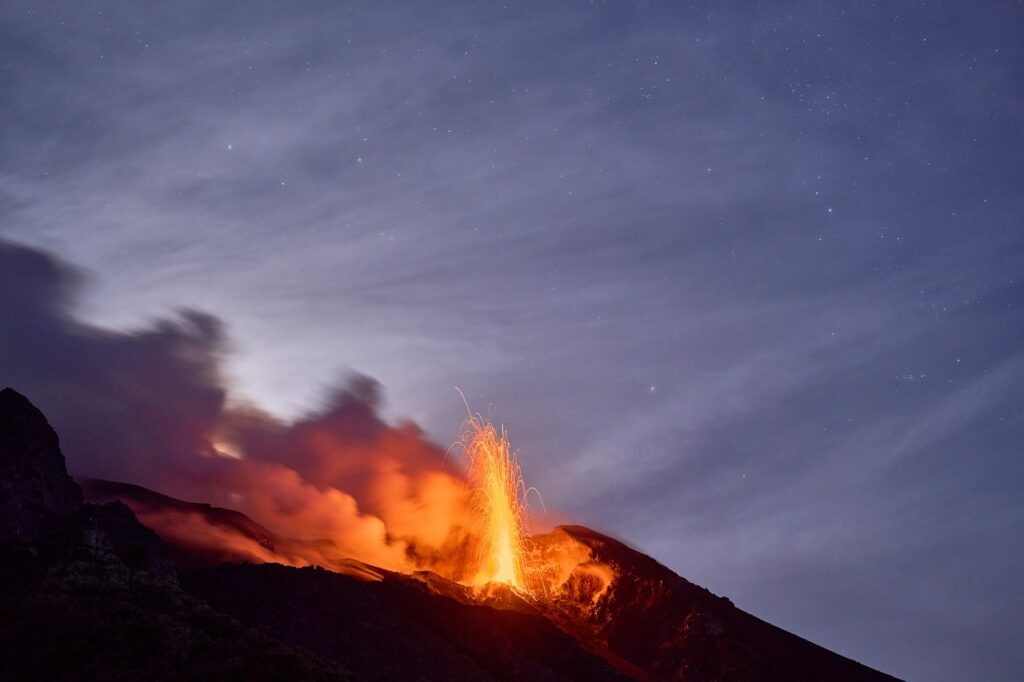
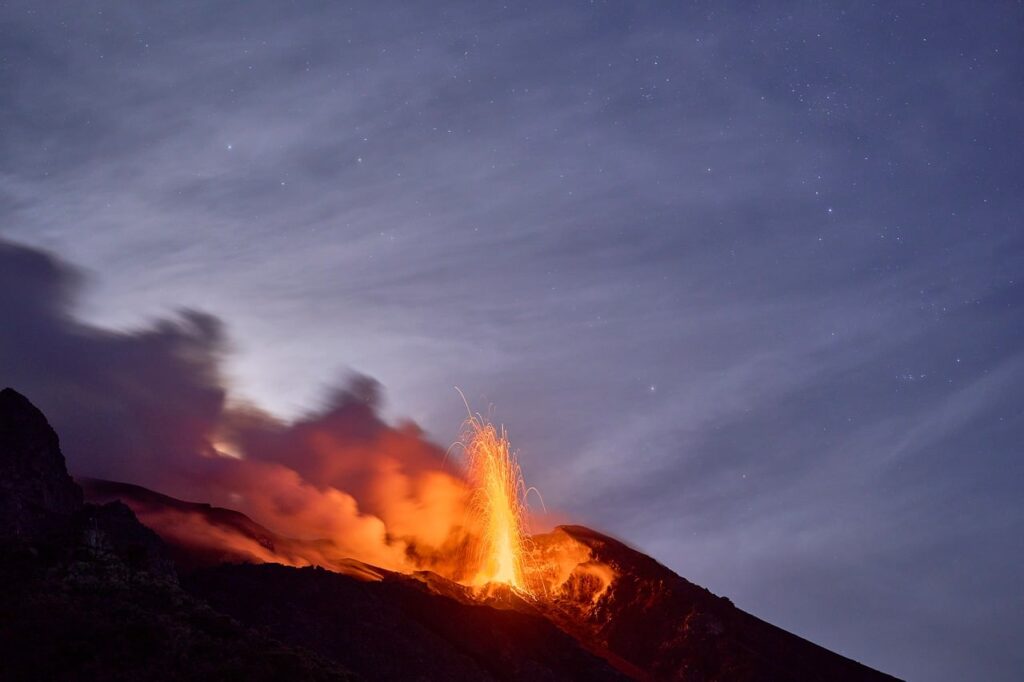
Stromboli and Vulcano are the Aeolian Islands’ most active and therefore the most instructive places for a field volcanic observatory. In Stromboli, the practical reference point for visitors is Piazza San Vincenzo, where ferries arrive and local guides gather: Piazza San Vincenzo, 98050 Stromboli ME, Italy. From there guided hikes depart toward the upper natural observatory altitude (official routes) to witness the nocturnal Strombolian explosions. Indicative price for a guided excursion: €40–€60 per person (rates vary by guide and duration). Typical schedule: departures in the late afternoon — 17:00 to 18:00 for the ascent, night observation between 20:00 and 23:00, and a late return. These hikes are run by licensed guides; do not attempt the climb alone without an experienced guide, especially at night.
On site, look for: short incandescent projections, periodic muffled booms, thin dust columns rising from the crater, and a sulfur smell carried by the wind. Signs that would justify an immediate evacuation include a sudden increase in the frequency and energy of explosions, dense ash emissions reducing visibility, or incandescent flows changing course. On Vulcano, the Archaeological Park and the Gran Cratere trail (Laghetto della Lingua / Gran Cratere) offer an observatory for degassing and hot ground: access from Porto di Vulcano, 98050 Isola di Vulcano ME, Italy. Trail access: generally open but safety regulations are posted at the trailhead; typical opening hours 08:00–19:00 depending on the season. Entry fees: the trail is often free, but guided tours can cost between €20 and €50.
Technical tips: bring an FFP2 dust mask and protective eyewear, especially during degassing episodes; carry a basic respiratory kit in case of irritation. Keep the regulated distance from fumarolic vents (areas marked by park signage). For real-time seismic and seismometric data, check the Istituto Nazionale di Geofisica e Vulcanologia (INGV) bulletin beforehand: INGV – Istituto Nazionale di Geofisica e Vulcanologia, Sezione di Palermo, Via Ugo La Malfa 153, 90146 Palermo PA, Italy. Online bulletins are free and essential before any hike.
2) Marine and Coastal Observations: Lipari, Salina and Panarea — Signs at Sea
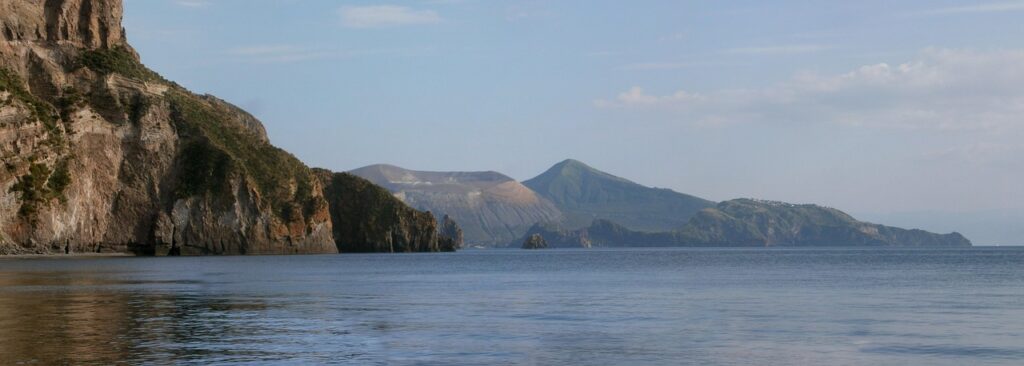
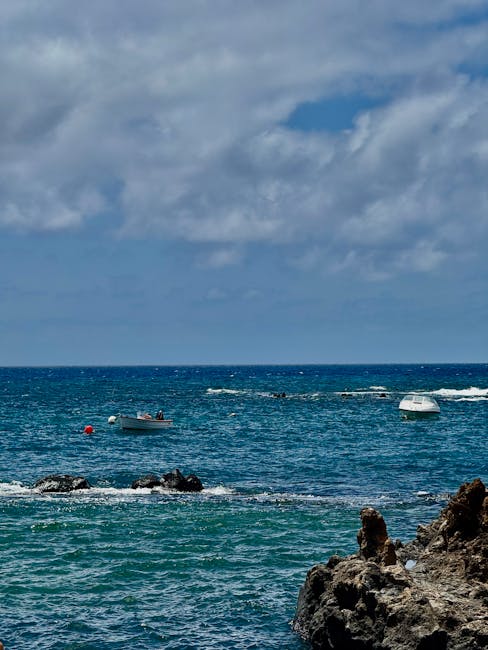
Activity signals aren’t only geological: the sea around the Aeolians transmits essential clues. In Lipari, the Aeolian Archaeological Museum (Museo Archeologico Regionale Eoliano – MARE) housed in the castle, Via del Castello 1, 98055 Lipari ME, Italy, helps explain historical interactions between people, volcanism and the sea. Hours: 09:00–19:00 (high season; check seasonally); price: about €6.00 for entry. After your visit, head to the Punta Lingua viewpoint (location: Punta Lingua, 98050 Leni, Lipari) to observe water color, foam and currents around the reefs — yellowish or greenish discolorations can indicate hydrothermal plumes or mineral inputs.
In Salina, Santa Marina Salina (Piazza Europa, 98050 Santa Marina Salina ME, Italy) is a good launch point for boat trips to areas of warm upwellings and for watching seabird behavior and fish schools. Boat operators generally charge between €25 and €60 per person for a few-hour tour. Biological signals to watch include sudden gatherings of birds over a precise spot, dolphin congregations and changes in water clarity: these often point to nutrient inputs or hydrothermal changes.
Panarea, with its small coves and shallow bottoms, allows observation of air bubbles and mineral filaments at the surface — signs of underwater emissions: recommended starting point Porto di Panarea, Piazza San Pietro, 98050 Panarea ME, Italy. Zodiac trips at sunset (frequent departures 18:00–20:00) often reveal white smoke or steam escaping near the rocks. To stay safe, consult the local coast guard (Capitaneria di Porto — contact details are posted in all ports) before heading out; port INFORMATION varies with weather and alert levels.
3) Biological and Microclimatic Signals: Wildlife, Plants and Hot Ground — How to Interpret Them
Biology and microclimate provide early warning signs of a zone’s activity. In the Aeolians, thermophilic vegetation (plants adapted to mineral-rich soils) and seabird colonies are easy indicators to spot. For example, Stromboli’s dry slopes show scorched shrubs and sparse plant carpets, a sign of warm ground and past degassing. Watch bird concentration and behavior: an unusual influx of gulls or terns into a particular bay can signal a nutrient input or fish mortality related to oxygen changes.
In practice, take surface temperature readings (a portable infrared thermometer is recommended) near blackened ground or ungated fumarolic areas: temperature differences (often +5–20 °C) help identify active vents. Avoid direct contact with ground weakened by heat: the surface can collapse. On Vulcano, some areas near the Laghetto di Fanghi (mud pool) show hot mud — access may be restricted during active periods; respect park signage. On Panarea and Lipari, the presence of certain foraminifera and algae near warm springs alters the color and texture of intertidal zones: visual detection (green–yellow discoloration) is a cue for scientific investigation rather than an immediate danger.
Local tips: observe wildlife discreetly without disturbing it — animal agitation can be a natural alarm. Bring binoculars, a notebook and an IR thermometer. If you notice unusual signs (persistent strong odors, fish die-offs, continuous smoke or felt tremors), report them to local authorities (Lipari municipal tourist office, Via Vittorio Emanuele 5, 98055 Lipari ME — hours usually 09:00–18:00 in high season) and consult the INGV for scientific context.
4) Recommended Observation Routes, Gear and Safety — Addresses, Prices, Opening Times
To structure a week-long natural-observatory trip in the Aeolians, here are some suggested itineraries and practical addresses:
- Lipari — Aeolian Archaeological Museum (Museo Archeologico Regionale Eoliano), Via del Castello 1, 98055 Lipari ME, Italy. Hours: 09:00–19:00 (high season). Price: €6.00. Usefulness: historical and geological context, old maps.
- Stromboli — Departure point Piazza San Vincenzo, 98050 Stromboli ME, Italy. Night guided excursions: €40–€60; departures 17:00–18:00, observation 20:00–23:00. Booking strongly recommended.
- Vulcano — Gran Cratere trail, access from Porto di Vulcano, 98050 Isola di Vulcano ME, Italy. Access hours vary (regulations in place): check with the local office. Guided tours: €20–€50.
- Salina — Porto di Santa Marina Salina, Piazza Europa, 98050 Santa Marina Salina ME, Italy. Boat excursions: €25–€60.
- Panarea — Porto di Panarea, Piazza San Pietro, 98050 Panarea ME, Italy. Coastal excursions: €30–€70 for mini-cruises and thermal observation trips.
Recommended gear: sturdy hiking boots, windproof jacket, FFP2 mask, protective glasses, headlamp for night observation, tripod and binoculars, an infrared thermometer and a small first-aid kit. For sea trips: life jackets are provided by boat operators; check weather conditions with the Capitaneria di Porto (present in every major port).
Safety and legality: respect prohibition signs, barriers and your guides’ instructions. Degassing zones can be unstable and make the ground crumbly. If in doubt or if you encounter alarming signs (felt seismic activity, visible ash, sudden degassing), move back immediately and notify the competent authorities. Public information, bulletins and official maps from INGV and regional offices are your best allies when planning outings.
Conclusion: Become a Responsible and Curious Observer of the Aeolians
The Aeolian Islands offer exceptional terrain for anyone wanting to understand natural activity signals — volcanic, marine and biological. By combining respect for the rules, logistical preparation (addresses, hours, prices) and attention to visual and auditory cues, you’ll turn every outing into an instructive and safe experience. This guide listed concrete observation points (Piazza San Vincenzo in Stromboli, Museo Archeologico Regionale Eoliano in Lipari, Porto di Santa Marina Salina, Porto di Panarea and the Gran Cratere trails on Vulcano), provided practical references (variable hours, indicative prices in euros) and detailed the signals to watch for: projections and degassing, sea discolorations, animal behavior and microclimate variations.
To close, a few concise recommendations: always check official bulletins (INGV and local offices) before an excursion; favor licensed local guides for volcano climbs; carry appropriate protective gear and obey signs and safety instructions. The Aeolians’ beauty lies in their dynamism — choosing to observe rather than impose your presence also helps conserve these environments. Finally, if you spot an unusual signal (strong odors, wildlife mortality, tremors), document it with photos and notes and share the information with authorities and scientific stations to improve collective knowledge and safety for everyone.
Safe observing: may your gaze grow patient and attentive to the subtle cues of land and sea. Always double-check hours and prices before you go (seasonal changes and regulation updates may apply), respect protected areas and favor local operators for authentic, secure encounters.